SOLUTIONS

Produced-water solutions

A comprehensive produced-water portfolio connecting oil and solids separation, H₂S conditioning, treatment equipment, chemistry and process integration.

Cleaner water.
Keep the momentum.

Protect the next stage of your operation. Explore two technology platforms that bring solids control, pressure management and practical deployment into focus.

HIGH-PRESSURE SOLIDS CONTROL

Saudi patent pending

MCADRE INLINE DESANDER

Intercept the solids.
Protect the flow.

Sand, rust and mineral particles have consequences far beyond the inlet. MCADRE is designed to separate solids from high-pressure seawater before they reach pumps, valves, membranes and injectors.

INSIDE THE CONCEPTTechnology illustration · select to explore
HIGH-PRESSURE DESIGN TARGET

480 PSI

Up to 33 bar · final rating defined by the project
01 Separate the solids

Divert a solids-rich bleed from the main water stream for separation and managed disposal.

02 Return the carrier water

A carrier-water return loop is designed to recover water and support continuity of flow within the pressure system.

03 Protect the next stage

Target abrasive solids upstream of critical equipment, with the aim of reducing maintenance demand and supporting injection reliability.

FROM MOBILE PACKAGE TO FULL PLANT

Saudi patent pending

PRESSURE-PRESERVING WATER TREATMENT

Treat the water.
Carry the pressure forward.

A modular platform concept that connects iron and solids removal, conditioning and ceramic ultrafiltration. The objective: prepare water for its next duty while retaining pressure through treatment.

ONE PLATFORM. DIFFERENT SCALES.Concept illustration · mobile and full-plant configurations

DESIGNED AROUND THE DUTY

Water quality and pressure.
Considered together.

Target iron, suspended solids and silt density index (SDI) as part of an integrated pretreatment strategy. Select the configuration around the feed, available utilities and downstream water-quality requirements.

Explore a configuration for your site
01 / PRESERVE

Pressure through treatment

Consider the pressure balance across the treatment train and its next process stage.

02 / PREPARE

Water for the next duty

Connect solids removal, conditioning and filtration around the required outlet quality.

03 / DEPLOY

Scale to the operation

Explore mobile, modular or full-plant configurations for the application.

Remote operationsProduced waterFrac padsIndustrial pretreatment

Concept overviews supplied by SAC. Operating pressure, treatment performance, pressure retention and deployment configuration are defined for each application. Proprietary operating logic and interlocks are not disclosed.

Connect every
treatment stage.

Bring separation, sour-water conditioning, chemistry, monitoring and downstream requirements into one application-led design.

01

Bulk separation

Remove free oil and establish the first treatment stage with API 421 separators, free-water knock-out systems and horizontal or vertical skimmers. ETS references include SKIM-SEP.

02

Coalescence and solids handling

Use corrugated-plate interception and coalescing packs for enhanced gravity separation. Hydrocyclones and desanders address the solids duty. ETS references include ENVIRO-SEP CPI.

03

Flotation and fine oil removal

Induced-gas flotation, compact flotation units and micro-bubble approaches address dispersed oil and suspended solids. The ETS portfolio includes ENVIRO-CELL IGF, CFU and combined CPI–flotation configurations.

04

Filtration and polishing

Walnut-shell / nutshell filters, activated filter media and other media filters support downstream water quality. The wider ETS portfolio includes ENVIRO-SHELL, pillow, ceramic and carbon filtration. Fine filtration and cartridge polishing, where specified, are selected around the downstream requirement.

05

Sour-water conditioning

Mechanical stripping and hydrodynamic gas transfer can be integrated with oil and solids removal for H₂S-bearing feeds. The gas-handling route and any final chemical polishing are defined for the application.

06

Drainage, sumps and monitoring

Sump tanks, skim piles and sump caissons support drainage and water handling. ETS references include SUMPERATOR. Oil-in-water monitoring, inline or side-stream sensors and process controls help track the treatment operation.

07

Downstream process integration

Define the pretreatment quality needed ahead of ion exchange, membranes or other downstream processes. The supplied Kern River pilot evaluated flotation and activated-filter-media polishing ahead of ion-exchange resin treatment; each project defines its own process boundaries.

These are available treatment approaches, not a fixed sequence. Feed composition, flow, pressure, gas handling and the required water quality define the train. ETS product references identify Enviro-Tech Systems.

Connect the chemistry and the operating insight.

Application-specific clarification, demulsification and polymer chemistry can support the selected separation stages. Development interests also include adaptive flotation and process control, with qualification defined for the intended application.

Reservoir monitoring is a separate application: SPARK2030 explores chemical placement with distributed fibre-optic sensing (DFOS) for EOR. Its reservoir-monitoring concept is distinct from the surface produced-water treatment train.
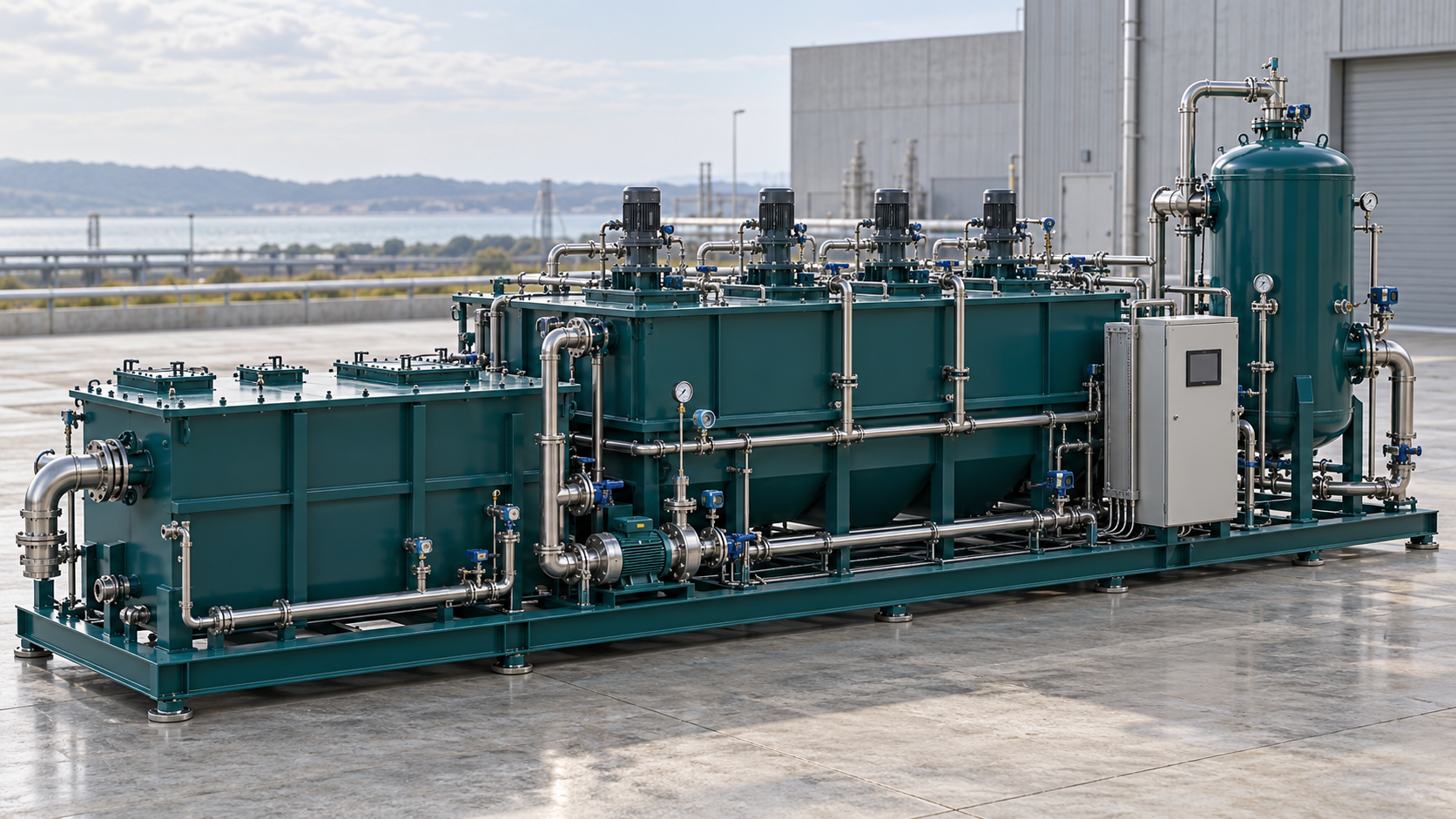
More capacity.
Same footprint.

Designed for faster separation within the skid footprint, connecting treatment stages with measurement and adaptive control.

Fluid dynamics.
Focused on sour water.

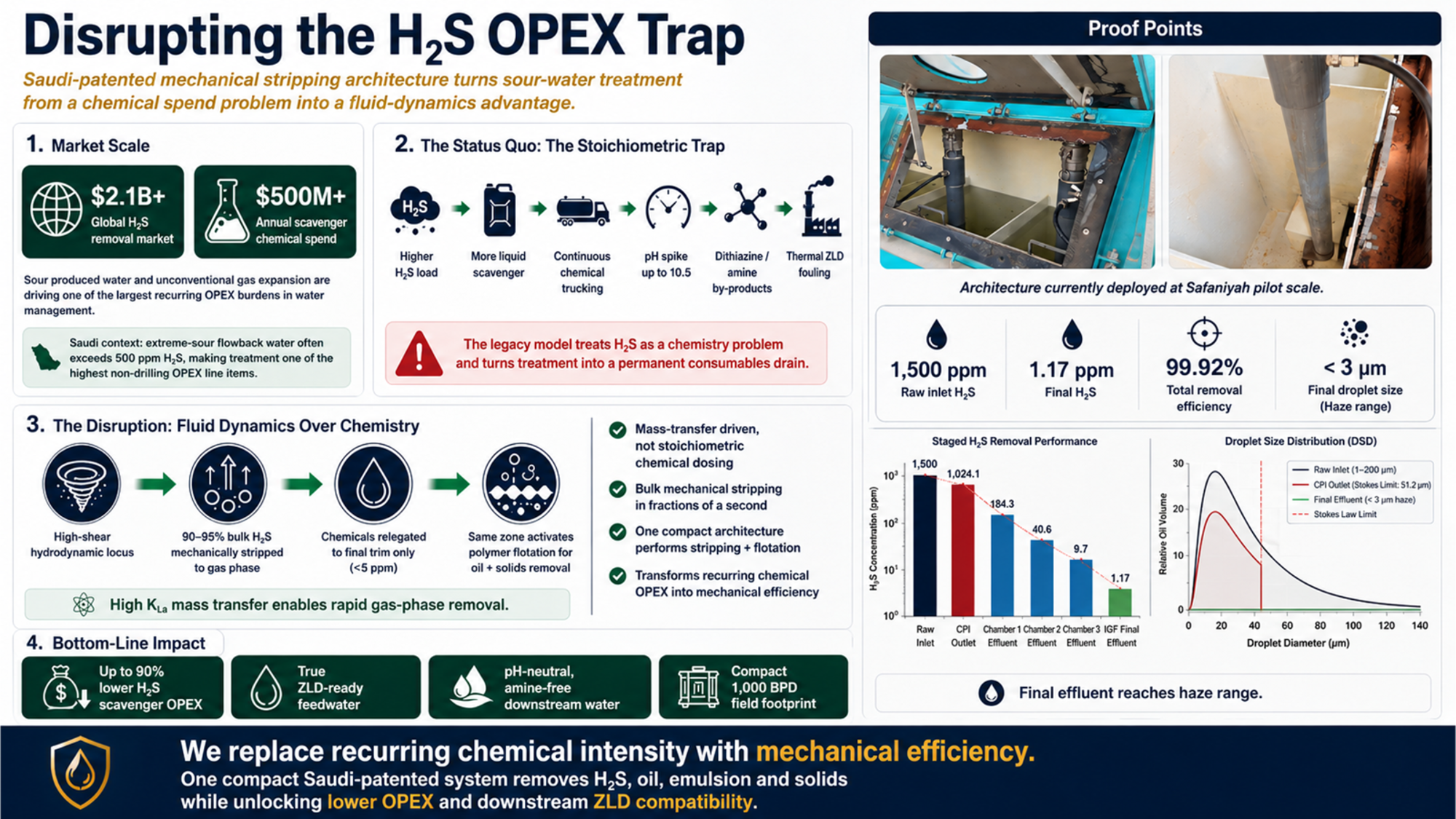
A mechanical treatment approach connecting H₂S stripping with oil and solids separation.

SAC-supplied views of internal mechanical treatment hardware for sour produced water

Reduce the dependence on recurring chemical treatment.

Our approach uses hydrodynamic gas transfer to move dissolved H₂S from the water into a managed gas phase, alongside separation stages for oil and suspended solids.

Mechanical bulk removal and application-specific chemical polishing can be combined in a compact treatment train. Feed conditions, gas handling and the required outlet quality define the design.

Mechanical strippingGas transferIntegrated separationApplication testing
Discuss sour-water treatment Explore H₂S removal

Understand. Design.
Validate. Integrate.

A clear path from an operating problem to a considered treatment solution.

01

Understand the feed

Review water composition, oil and solids loading, H₂S, flow, pressure and operating conditions.

02

Define the solution

Match the treatment sequence, equipment and chemistry to the required outlet quality.

03

Validate the application

Use application testing and pilot evaluation to inform the design and its operating envelope.

04

Plan integration

Consider installation, utilities, controls, maintenance and the practical needs of the operation.

Go deeper into
the application.

Explore the equipment, chemistry and testing programmes connected to water and energy operations.

Discuss this application